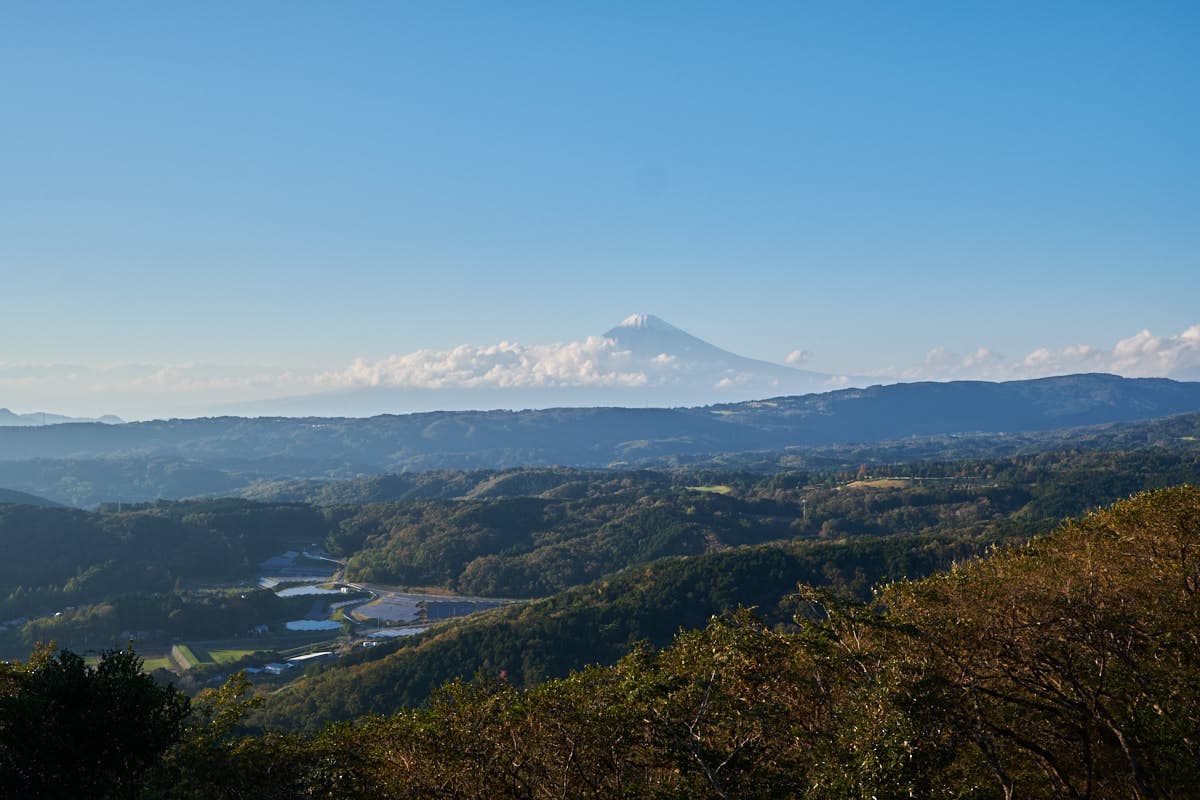
Izu Skyline
The Izu Skyline (伊豆スカイライン) is a premier 40-kilometer stretch of sightseeing highway that traverses the central mountain ridges of the eastern Izu Peninsula. Beginning near Atami Pass and winding southward to Amagi Kogen, this traffic light-free road offers an elevated perspective of the region’s dramatic volcanic topography. It serves as a scenic, albeit paid, bypass to the often-congested coastal routes. The toll for a standard passenger car to traverse the full length of the skyline is 1,000 yen, though shorter sections can be accessed for smaller increments starting at 200 yen.
As it follows the spine of the peninsula, the road acts as a natural balcony overlooking both Sagami Bay to the east and Suruga Bay to the west. On clear days, the majestic silhouette of Mount Fuji dominates the northern horizon. Numerous designated parking areas and observatories—such as Takichiyama and Kurotake—are strategically placed to allow for uninterrupted photography. The skyline is particularly renowned for its evening atmosphere, having been designated as one of the “100 Night Views of Japan” for the sparkling urban lights of Atami and Numazu visible from the mountain heights.
Geologically, the highway cuts through the heart of the Fuji-Hakone-Izu National Park, crossing the ancient volcanic terrain that defines the Izu UNESCO Global Geopark. The high-altitude environment is often several degrees cooler than the coast, offering a refreshing retreat during the humid summer months. The southern terminus eventually connects with Route 111, facilitating onward travel toward the rugged Jogasaki Coast. Because of its pristine environment and the technical joy of the mountain pass, the Izu Skyline remains one of Japan’s most celebrated driving destinations for those willing to pay the premium for the view and the convenience.