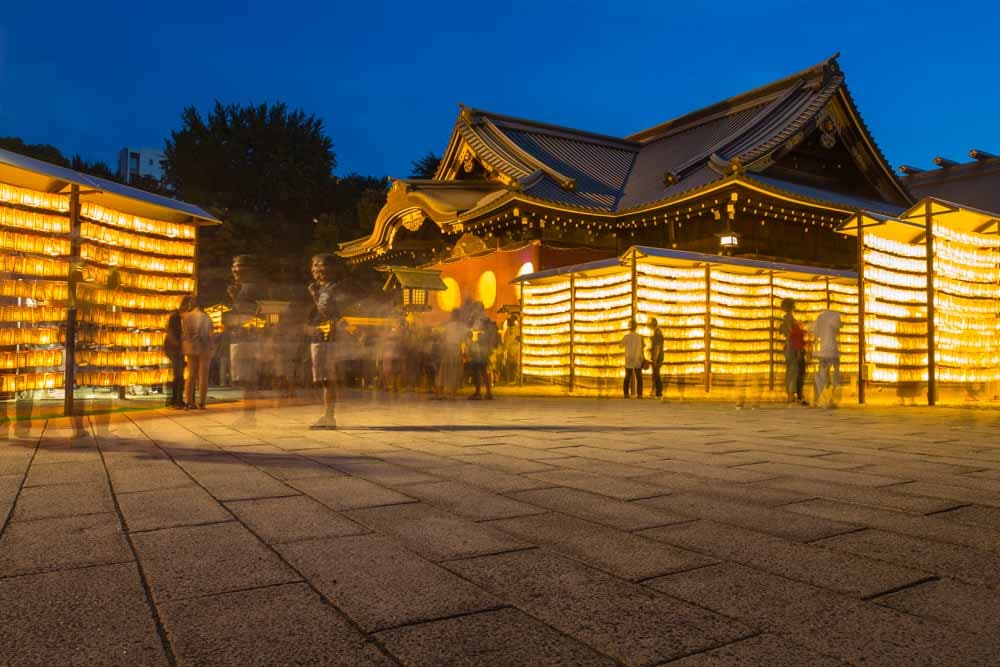
Yasukuni Shrine
The history of Yasukuni Shrine (靖国神社) as a site of enshrinement for the war dead extends back to its establishment in 1869. Originally named Shokosha, it was founded by the Meiji Emperor to commemorate those who died in service of the throne during the Boshin War. Since then, the souls of nearly 2.5 million people lost in various conflicts—including the Sino-Japanese and Russo-Japanese Wars—have been enshrined here. However, Yasukuni remains a site where history is less a settled matter and more a living argument, primarily due to the 1978 secret enshrinement of 1,068 convicted war criminals, including 14 Class-A criminals from World War II.

The controversy surrounding the shrine is often reignited by the visits of high-ranking Japanese politicians. While former Prime Minister Junichiro Koizumi was famously resolute in his annual visits during the early 2000s, more recent leaders have adopted a strategy of “ritual distance.” Most current Prime Ministers avoid physical visits on the sensitive August 15th anniversary (the end of WWII) to prevent diplomatic fallout with China and South Korea, opting instead to send a masakaki (sacred tree) offering. This middle-ground approach seeks to satisfy a conservative domestic base while minimizing international friction, though it rarely succeeds in fully quieting the scrutiny.
Ironically for a shrine that has caused so much resentment and protest abroad, the two kanji that make up Yasukuni’s name—bestowed by the Meiji Emperor—actually mean “peaceful country”.
The Yushukan Museum: A Revisionist Narrative
While the shrine itself is a place of prayer, the Yushukan Museum on the grounds is a place of education—or, as critics argue, revisionism. It is one of the oldest military museums in the world and houses authentic relics, including a Mitsubishi Zero fighter plane and a “Kaiten” human torpedo. The museum is the focus of intense debate because its exhibits present a narrative of the Pacific War as a conflict of self-defense and an attempt to liberate Asia from Western colonialism, a perspective that stands in sharp contrast to the mainstream historical consensus of Japanese aggression.

Despite its heavy political weight, Yasukuni is also a site of profound natural beauty. It is home to the “Sample Tree”—the specific Somei Yoshino cherry tree that the Japan Meteorological Agency uses to officially declare the beginning of Tokyo’s cherry blossom season. When the agency’s inspector counts five or six blooming flowers on this particular tree, the “opening” of the season is announced to the nation. During this time, the approach to the shrine is lined with festival stalls selling yakitori and yakisoba, as thousands of visitors gather to celebrate the blossoms, momentarily eclipsing the shrine’s complex history with a display of seasonal joy.
| Visitor Information | |
|---|---|
| Address | 3-1-1 Kudankita, Chiyoda-ku, Tokyo 102-8246 (Google Maps) |
| Opening Hours | Grounds: 6:00 AM – 6:00 PM (Mar-Oct) / 5:00 PM (Nov-Feb) Museum: 9:00 AM – 4:30 PM |
| Price | Grounds: Free / Museum: ¥1,000 (Adults), ¥500 (Students) |
| Website | Official Website |
| Access | ||
|---|---|---|
| Station | Line(s) | Details |
| Kudanshita Station | Tozai / Hanzomon / Shinjuku Lines | 5-minute walk from Exit 1. |
| Ichigaya / Iidabashi | JR Chuo-Sobu / Subway Lines | 10-minute walk to the main gate. |